How I Took Opera Outside the Opera House
When I first decided to pursue singing professionally, I learned very quickly how the system was supposed to work.
As opera singers, we’re taught that the “right” path is connection-based. You study, you refine your craft, and then—hopefully—someone with influence decides to open a door for you. A casting director. A conductor. An institution. Your career, in many ways, sits in someone else’s hands.
I knew early on that this wasn’t the direction I wanted to go.
Not because I didn’t respect opera. I’ve always loved the art form itself. What I struggled with was the culture around it—the rigidity, the unspoken rules, the distance between the singer and the audience. Don’t clap here. Don’t record. Don’t engage too much. And above all, opera belongs here, inside an opera house, nowhere else.
That never made sense to me.
I didn’t wake up one day wanting to “disrupt” the industry or shake things up for the sake of it. My goal was much simpler: I wanted more people to experience classical voice. I wanted opera to be seen, heard, and felt by people who would never intentionally walk into an opera house.
So I built a different path.
I took the discipline and technique of opera and placed it into a mainstream model. Not crossover—this distinction matters to me—but opera, presented through modern platforms. Radio shows. Sports arenas. Corporate events. Social media. Places where people already are.
Think of it less as changing opera and more as removing the gate that’s been placed between the singer and the listener.
One of the most common questions I’m asked in interviews is, “So would you consider yourself a crossover artist?” And my answer is always no. I’m an opera singer who understands the power of visibility.
Understanding how platforms work doesn’t make the voice less classical. Being intentional about image doesn’t take away from the music. In fact, one of the most meaningful pieces of feedback I hear—over and over—is this:
“I would have never stopped to listen to opera if I hadn’t seen you first.”
That stops me every time.
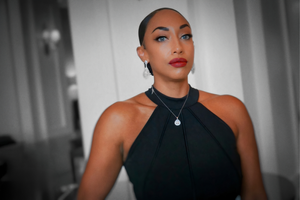
People tell me it was the image that made them pause, but it was the voice that made them stay. To me, that’s not a problem—that’s the point. If image opens the door and classical voice does the rest, then the art form wins.
Over the years, that approach has come with criticism. Some from traditional spaces. Some from people who believe opera should remain untouched and contained. I understand where that perspective comes from, even if I don’t agree with it.
What I’ve learned is this: knowing your value as a singer sometimes means trusting your instincts even when there’s no existing lane for you. It means being willing to be misunderstood while you build something new. And it means not waiting for permission to share your voice.
When people tell me I’m the “Sade of opera,” I don’t take that lightly. It tells me that the connection is working—that classical voice, when presented with intention and openness, still moves people deeply.
That’s always been the goal.
— From the desk of the Queen of Opera